


Uninvited visitors in Egyptian vulture nest (Short stories from guards’ diaries)
28.01.2014- Home
- Useful information
- Uninvited visitors in Egyptian vulture nest (Short stories from guards’ diaries)
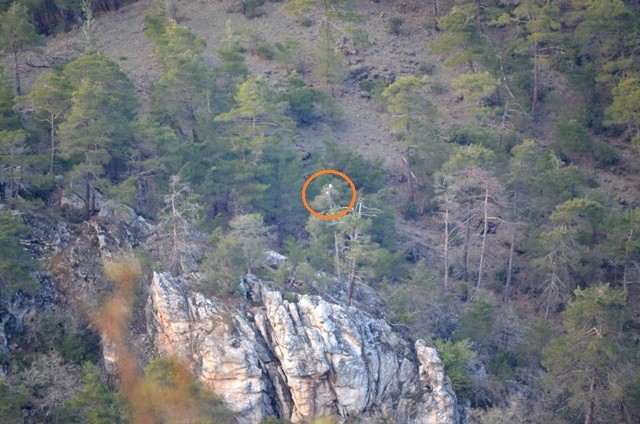
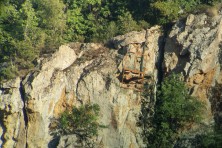
It is 10th of September and the chick Egyptian vulture "Katerina" is still in the nest situated at the Dadia Forest. Two days ago, her older brother "Paschalis" had started its long trip to Africa. "Katerina" has already started flying away from the nest and being absent for several hours. The parents were also absent for hours. Near noon, the juvenile returned and entered the nest. After a while the parents arrived at the nest too but their behaviour was strange. They looked for food at the nest's floor and the male was ticking the juvenile off and pushing it out of the nest. Katerina, the nest guard, focusing on the adults' facial pattern she realized that these two birds were not the real parents. The chick flew out of the nest and roosted on the rock. In a while, the real parents -Paris and Ioli - appeared in the valley and each of them threw away the male and female intruder respectively. They mobbed them till they disappeared from the nests' valley. They came back and they stayed near the nest for the rest of the day.
Intraspecific kleptoparasitism by Egyptian vultures of food left in other nests* is not rare and food piracy in nests of other vultures is also well known. This time the intruders were not fledgling but adult Egyptian vultures.
*Donazar, J.A., Ceballos, O. 1990. Acquisition of food by fledgling Egyptian Vultures (Neophron percnopterus) by nest switching and acceptance by foster adults. Ibis 132: 603-617.
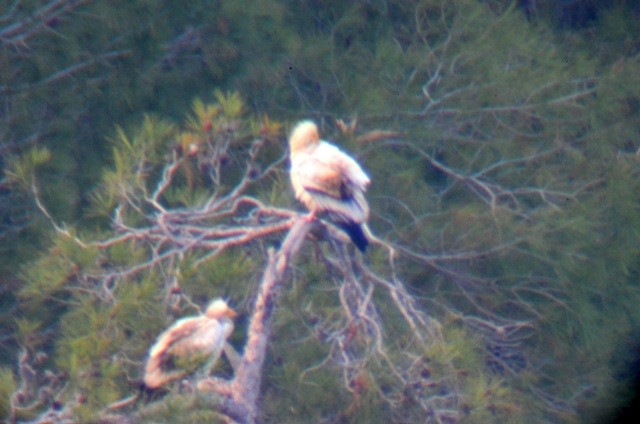
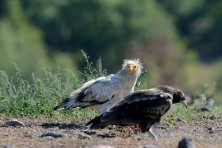
The door of the artificial nest is now open


 iordanka.goranova@bspb.org
 +359 (02) 979 95 00

