


Hot News
- Home
- Hot News
|
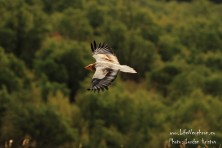
Spectacular decline of 7 % per year of the Egyptian Vultures’ population in Eastern Europe
12.02.2015New scientific publication on the status of the Balkan population of the Egyptian Vulture over the last 30 years has published in Bird Conservation International . A large group of collaborators from Bulgaria, Greece, Serbia, Albania, Turkey, and the Former Yugoslav Republic of Macedonia compiled all survey data from the Balkan Peninsula from 1980 until 2013. The team...
|
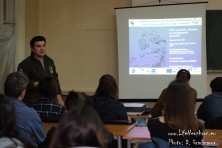
The fate of Egyptian vultures in the Balkans - what do we know and how can we save them?
05.02.2015A Lecture: "The fate of the Egyptian vulture on the Balkans - what we know and do not know about saving him?" was held last Tuesday (02/03/2015) in Sofia, within the School of Ornithology and Nature Conservation of the Bulgarian Ornithological Centre at the Institute of Biodiversity and Ecosystem Research, BAS . The Project manager of the LIFE+ project “The Return...
|
BSPB announces a vacancy for assistant Communications and Public Relations for Eastern Rhodopes
04.02.2015In relation to the increased need for communication and feedback with key audiences in the Eastern Rhodopes, the Bulgarian Society for the Protection of Birds announces a vacancy for Communications and Public Relations assistant for Eastern Rhodopes. Summary description of the position: 1. Carry out the planned activities and events, according to the...

|
Work preventing bird electrocutions on power lines wins good practice award
29.01.2015The Bulgarian Society for the Protection of Birds and the BirdLife International Partnership have won the Renewables-Grid-Initiative (RGI) “Good Practice Award” in the environmental protection category. The award was presented at RGI’s annual conference in Brussels on 27 January, for their work on preventing bird deaths due to electrocution and...
|
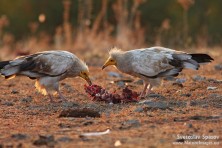
Diet is not related to productivity but to territory occupancy of the Egyptian vulture on the Balkans
22.01.2015In the Balkans, the Egyptian vulture population is declining more rapidly than elsewhere in Europe, with 80% decrease in the numbers in the last 30 years ( Velevski et al. 2015 ). Changes in diet composition and diversity could explain this negative trend, but so far the relationship between diet and demographic parameters of the population are poorly studied....
|
Last information about the tagged Egyptian vultures
15.01.2015We continue to follow with interest the movements of the tagged with satellite transmitters young Egyptian vultures and ... Castor: Castor - the only Egyptian vulture, which was tagged with a satellite transmitter not as a young bird in the nest, but when he was four years old, founded poisoned in Greece, but rescued and released . Just a few months later he proved...


 iordanka.goranova@bspb.org
 +359 (02) 979 95 00

